
Expert Homeowner Guide
What this guide covers
How to evaluate drywall cracks, holes, stains, moisture damage, texture issues, and renovation conditions before deciding whether repair or replacement is likely.
- Drywall decisions depend on the cause of damage, not just the size of the visible mark.
- Moisture stains, soft material, recurring cracks, and hidden leak history deserve a closer review.
- Good photos should show the damaged area, the surrounding wall or ceiling, and any source that caused it.
Start by identifying why the drywall failed
A small hole from impact is very different from a stain caused by an active roof or plumbing leak. Before deciding on patching, replacement, or finish work, identify whether the drywall was damaged by water, movement, impact, previous repairs, settling, or renovation demolition.
- Impact damage is often more straightforward than moisture-related damage.
- Recurring cracks may point to movement, framing conditions, or repeated stress.
- Water stains should be traced to the source before the wall or ceiling is closed back up.
When repair may be enough
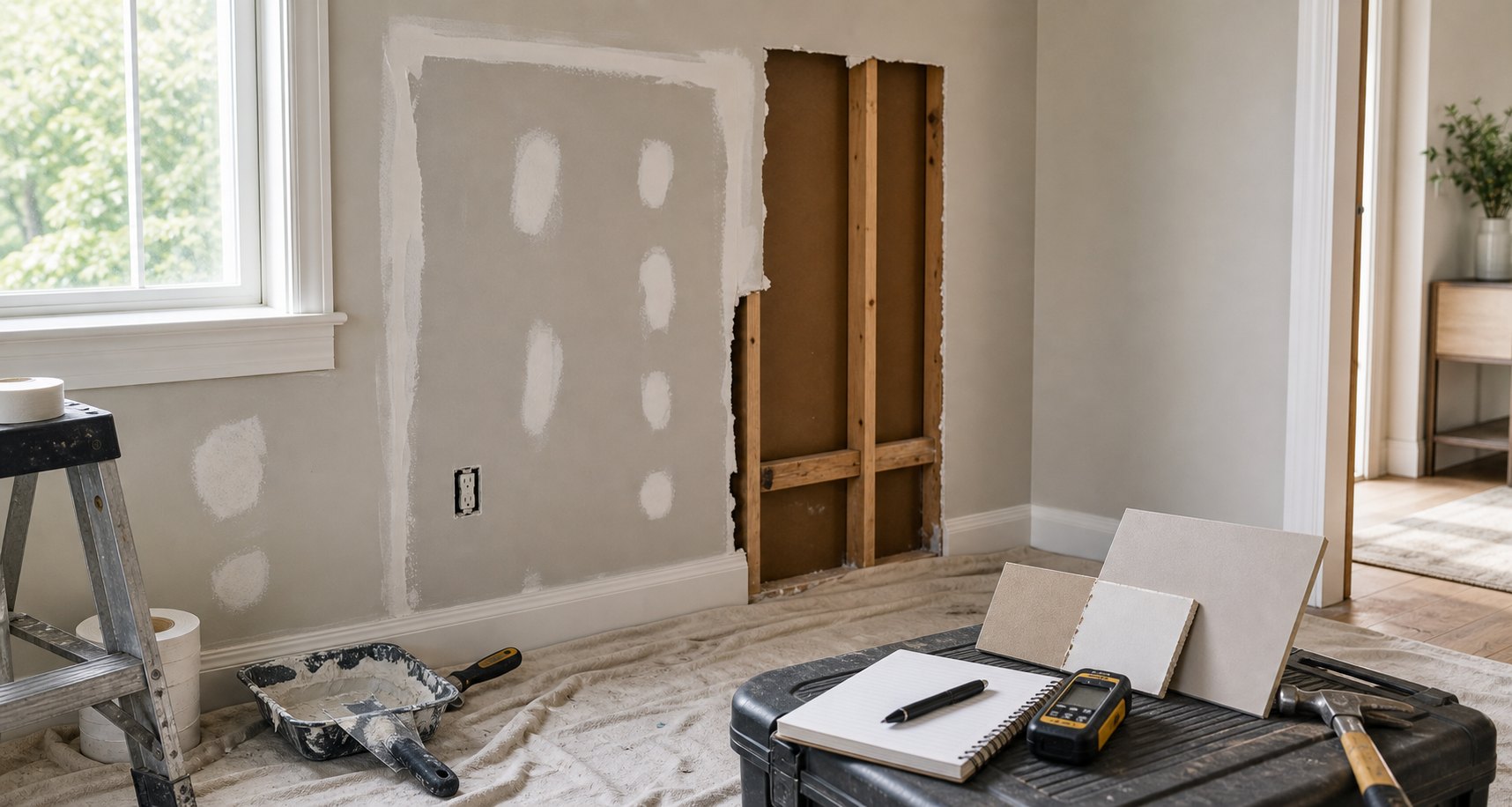
Drywall repair may make sense for isolated dents, nail pops, small holes, clean cuts from minor access work, or limited cracks that are no longer moving. The repair still needs the right backing, tape, compound, sanding, and finish preparation so it does not telegraph through paint.
- Small, dry, isolated damage is often reviewed as a patching scope.
- Clean edges and solid surrounding material make repairs more predictable.
- Texture matching and paint preparation should be discussed before work begins.
When replacement should be considered
Replacement is more likely when drywall is soft, swollen, mold-suspect, repeatedly wet, heavily cracked, poorly fastened, or damaged across a large area. Replacement may also make sense during renovations when open walls improve access for framing, insulation, plumbing coordination, or electrical coordination.
- Soft or crumbling drywall usually needs more than surface compound.
- Ceiling drywall affected by water can sag and should be taken seriously.
- Large renovation areas are often cleaner to replace than to patch repeatedly.
How to request a useful drywall estimate
Send photos from close range and across the room, explain what caused the damage, and note whether the area is dry now. Include room names, approximate dimensions, ceiling height if relevant, and whether painting or other renovation work is part of the same request.
Drywall repair or replacement checklist
- Cause of damage if known
- Photos from close range and across the room
- Whether the area is currently wet, dry, soft, or stained
- Approximate dimensions of the damaged area
- Any related roof, plumbing, renovation, or framing work
Frequently asked questions
Can water-stained drywall be painted over?
The source of moisture should be addressed first. Stain-blocking and paint may hide discoloration, but they do not fix active leaks, soft drywall, or trapped moisture.
Why do drywall cracks come back?
Cracks can return when the underlying movement, framing stress, joint condition, or moisture issue has not been addressed. The cause matters as much as the crack itself.
Do photos help with drywall estimates?
Yes. Photos help show scale, location, texture, water staining, and whether the drywall issue may be connected to another repair.
Next step for Southern Maine homeowners
If the conditions in this guide match what is happening at your property, send photos and a clear description through the estimate request form. El Roi Builders will review the details before recommending the next step.
View Drywallservices ->